
🎙️This week on the Back Row podcast: I interviewed Glitz correspondent Noëmie Leclercq about the Hermès game. Listen/watch in Apple Podcasts, Spotify, and YouTube. Premium subscribers can access paid episodes by entering the email affiliated with your newsletter subscriptions here.
Loose Threads
Condé Nast sold LGBTQ+ publication Them to Out publisher Equalpride. In a public memo titled “2025 Performance and Looking Ahead” (spicy), Condé CEO Roger Lynch said “we are exploring new operating structures for Glamour and Self, including potential partnership and licensing models.” He added, “Brands with the most revenue growth last year were Vogue, Condé Nast Traveler and The New Yorker.” Vogue World may confuse everyone, but it was among a suite of “tentpole events” (even spicier) that saw a 40 percent revenue boost.
People are still talking about Demna’s Gucci show. None of the reviews in legacy media were particularly critical (not nearly as critical as some social media commenters who don’t have advertisers to worry about). I did not find the show appealing but found it fascinating as an idea for a new sort of opulence fashion seems intent on selling. It strikes me as a win for Demna that people are still talking about it.
I don’t know why I keep thinking about embellished denim lately (to cure a part of my soul that has died?). But these from Monse looked super-cool on the women who work there at their recent fall 2026 preview in New York and are on sale at Nordstrom. This less outre pair by Reformation is also fun if you want to mix up your denim (YOLO).
Louise Trotter said her pretty great Bottega Veneta show was inspired by “Brutalism and sensuality.”
Hanan Besovic (@ideservecouture) walked Daphne Guinness down the runway at the Matières Fécales (Fecal Matter) show since she looked like she was about to fall. I like this approach — it hurts to watch models struggle on the runway.
Jack Schlossberg came out once more against Love Story, Ryan Murphy’s show depicting JFK Jr. and Carolyn Bessette’s romance that has become a sensation. “If you want to know someone who’s never met anyone in my family, knows nothing about us, talk to Ryan Murphy,” he said in an interview with CBS about why he should represent New York’s 12th district. “The guy knows nothing about what he’s talking about, and he’s making a ton of money on a grotesque display of someone else’s life.”
And now, today’s big story…
Can Jonathan Anderson Cure the 'Luxury Ick'?
Before the livestream of the fall 2026 Dior show started, the brand played b-roll of Jonathan Anderson talking to Bella Freud, the podcaster, designer, and Sigmund’s great-granddaughter. They sat near a chain link fence on the green modernist chairs in the Jardin des Tuileries (Anderson likes these chairs because once you see them, you know exactly where you are). Freud wore shades with “CD” on the sides and a jacket people who follow this stuff will recognize as Anderson’s Dior. The marketing was marketing.
Anderson told her the show he would present in three days was about “the idea to dress up and what does that mean today?”
“You used to dress up for status purposes,” he said. “Now it’s more about the psychology or what group are you part of.”
This is such clever positioning for a fashion show when people are so triggered by the idea of status, lately symbolized by the American oligarchy’s regular appearances in front rows. Though the Bezoses have been quiet this season, the memory of them sitting front row at couture a few weeks back and posing for photos with executives is still fresh. In their place, we saw Mark Zuckerberg and Priscilla Chan at the Prada show last week, escorted by Anna Wintour. These tech billionaires are shaping up to be the new Kardashians.
And fashion fans have a lot of feelings about this! The industry has prioritized Very Important Clients (the 2 percent of luxury buyers who account for 40 percent of sales) like the Bezoses and Zuckerberg/Chan over much less wealthy aspirational customers since the pandemic. The way Anderson talked about this fall 2026 show — in front of an average fence in a public garden — seemed like an invitation for aspirational customers to come back to Dior. The industry needs to do this as it struggles to grow in the face of the booming secondhand market, an uncertain economy, and consumers who have the “luxury ick,” as journalist Sujata Asumull termed the widespread disgust over price increases.
Pull up a seat.
Back Row is a reader-supported publication covering how fashion and culture really work without PR gloss. Subscribe for exclusive reporting, insider scoops, and full access to every issue and podcast episode.
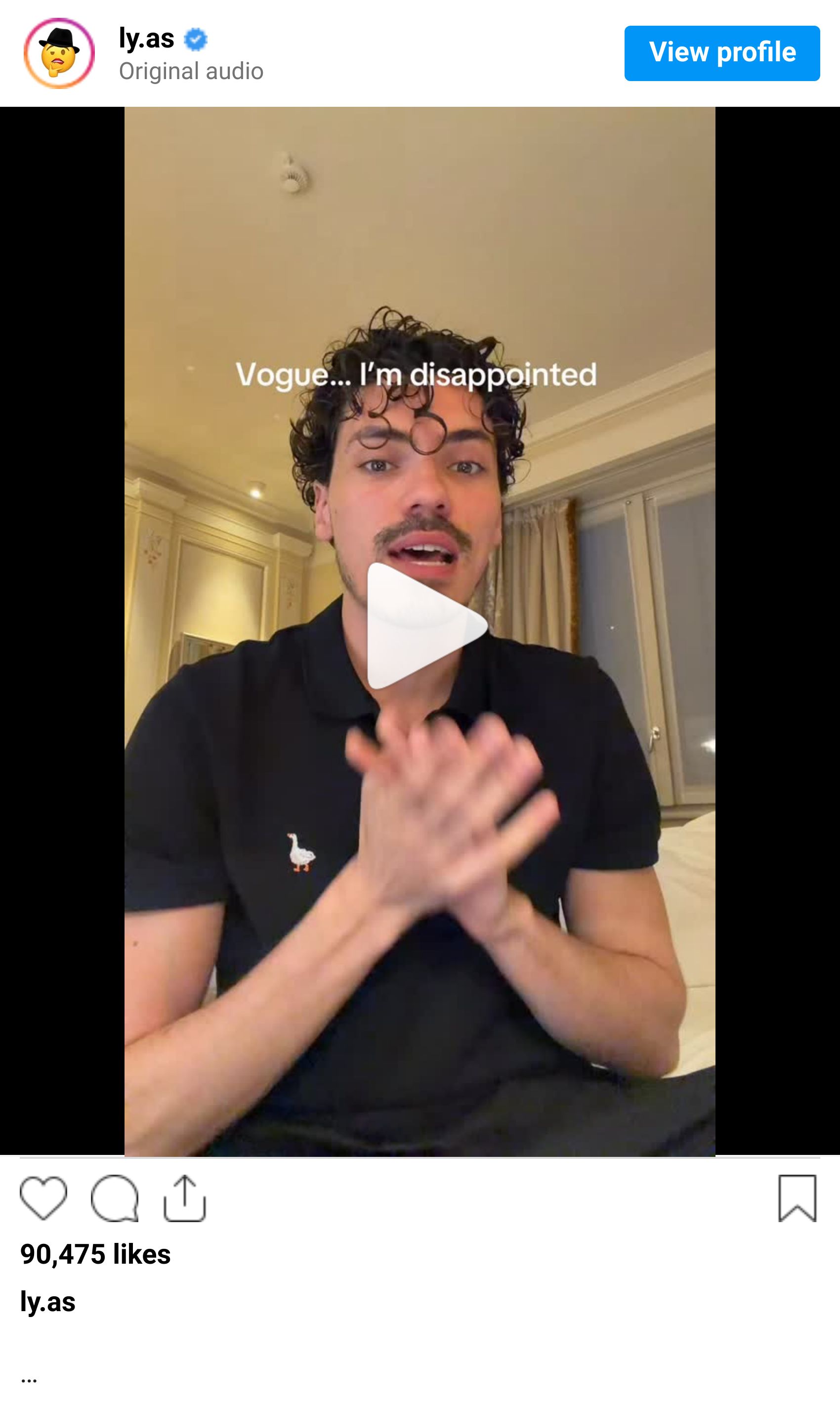
The fashion industry’s divide between elites and everyone else mirrors that same division between the ultrarich and the masses in the broader culture. Creator Elias Medini (@Ly.as) has been talking about this. Over the weekend, he posted a video saying he was “disappointed” in Vogue for hosting a watch party of the Balmain show when he has been hosting free watch parties of fashion shows (inspired by not being invited to Anderson’s first show for Dior) for the last year. His watch parties, he says, are unlike Vogue’s in that they invite everyone to come in order to “make fashion more accessible to break the elitism that’s rotting our industry.”
This type of fashion — that walks on elaborate runways erected over ponds artfully adorned with lily pads — wouldn’t exist without elites. But the industry at large and designers like Anderson still need those fans who don’t have lots of money but want to be part of what they do. I watched the show, as I increasingly do many, on Dior’s YouTube channel, which has 4.15 million subscribers. More people are watching Dior’s marketing videos here — including the fashion shows — than many television shows or movies. Surely more people see them here than on Vogue Runway, which essentially charges people to view marketing material. The acceptance of marketing as a cultural product has probably never been higher (which is why shows like Emily in Paris can incorporate blatant spon con without anyone much caring). Luxury fashion exists as the pinnacle of marketing as culture.
Arriving at this moment has taken decades of the entertainment industry and media declining and brands stepping in to fill that void. Recently, stylist Kate Young told Vanity Fair that brands now have more resources than movie studios:
“I don’t know how politically correct this is to say, but the reality is that brands are who hold the purse strings right now. When I started doing this, movie companies paid. I would make money doing a press tour, and now I am paid less for the same work than I was 15 years ago. And production companies now really rely on movie stars having brand deals to subsidize this. I think that’s even true with magazines. I don’t know whether you all want to admit it. We talk so much in this industry about the decline of luxury, but in fact, who has money? Dior and Louis Vuitton and Chanel. Movie companies aren’t making the money anymore. Magazines aren’t making the money anymore. Even celebrities, to a certain degree, aren’t making the kind of money making movies that they make from brand deals. I think really, you can just follow the money to see where the industry’s changed.”
It reinforced the point that Debra Birnbaum, who used to run awards campaigns for Amazon, made on the Back Row podcast a few weeks ago: that studios like when stars have deals with a brand like Dior, because that brand will subsidize red carpet styling for its spokespeople. And studios aren’t paying what they used to for that styling, even though red carpet moments are vitally important marketing opportunities for their projects and more numerous than ever before. The entertainment industry is now in thrall to fashion brands, instead of the other way around. Fashion, you could argue, is the pinnacle of culture, so it makes sense to go mass.
But did Anderson’s clothes bridge the divide between Dior and the plebes? Maybe more so than his previous work. The embellished jeans felt more mass than other pieces that spewed ruffles (I’m sure the price tag for both will be eye-watering). He also showed unadorned denim, and many models wore flat brown boots that would seem to make sense for a rendezvous in the park. The two coats that closed the show were great, as were the others that walked on their own with stiletto sandals and looked pleasantly unfussy.

Love. (Courtesy Dior)
But this is a Jonathan Anderson show, and he loves a fuss. Many pieces came with dangling bits and stuck-on flowers and hulking, stiff loops of fabric. The opening miniskirts trailed big ruffly tails that, from the side in the finale, made the models look like squirrels.

Sometimes I just want to sheer his clothes. (Courtesy Dior)

Tails. (Courtesy Dior)
Few would ever wear clothes with these decorations, but it makes the show more interesting, which matters in a marketing video. We saw the commercial spring 2026 pieces that hit sales floors and didn’t have the same awkward bits that the runway looks did. Dior had wisely merchandised those away and flooded racks with polos, cardigans, and sweatshirts, and the same will surely happen here.
This was Anderson’s best effort for Dior yet. Not only because of the clothes themselves, but really because of how he thought about packaging and selling the show and brand to an audience ready to revolt against what fashion has become.
What Premium subscribers are reading:


Amy Odell is the New York Times bestselling author of Gwyneth: The Biography; Anna: The Biography; and the essay collection Tales from the Back Row: An Outsider’s View from Inside the Fashion Industry. Write her at amy (at) amyodell (dot) com. Submit a tip or story request anonymously here.
