
🎙️ This is an edited excerpt of my conversation with Glitz correspondent Noëmie Leclerqc for the Back Row podcast. You can watch or listen to the full episode on YouTube, Spotify, or Apple Podcasts. Tap follow so you don’t miss new episodes. If you like the pod, please leave a rating and a review, which takes ten seconds and really helps other people find this independent show.
In January, the Daily Mail ran a headline about Hermès “stalking” its customers in order to decide who they should deign to sell Birkin and Kelly bags to. Yet, the “damning report” the outlet cited never used the word “stalk.” It was written by Glitz correspondent Noëmie Leclercq, who reported that the brand was employing an increasingly complex list of criteria in order to decide who should get to buy Birkins and Kellys, known as “quota” bags because customers can only buy two per year in order to, the thinking goes, discourage reselling. However, like so much lore about this brand, for every rule there seems to be a story of someone breaking it; when reporting the Birkin buyer confessions series for Back Row, I was told that if you spend millions with the brand each year, there’s no quota for you.
I picked up Leclercq’s story, too, asking my Hermès source in Paris if the brand really “stalked” their clients. “Why would they stalk people?” my source responded, insisting that pre-spend — or buying goods across multiple categories in the boutiques — was the most important determinant of who got to buy a quota bag. Leclercq commented on that story, doubling down on her reporting, so I invited her on the Back Row podcast so we could trade notes. We had a delicious conversation about Hermès, its sales practices, and what it all says about the new Gilded Age we’re living through. Plus, in the bonus episode for Premium subscribers (available on Apple and Spotify), we discuss whether or not the Birkin bubble has popped, and whether Hermès can maintain its mystique and appeal for generations to come.
For my full chat with Noëmie, sign up for a Back Row Premium subscription which includes access to every newsletter and podcast episode.
If you’re a Premium subscriber and haven’t yet set up your private podcast feed through Supporting Cast, click here, enter the email affiliated with your newsletter subscription, and you’ll receive an email with a link to access Premium pods. If you have any technical issues, reach me at amy (at) amyodell (dot) com or reply to this email.
I was told by my Hermès sources, some in Paris, some in the U.S., the main thing that Hermès looks at is the pre-spend, not addresses or other criteria, to determine quota bag eligibility.
I think that they have to find other ways to choose their clients because if it was only a matter of how much you spent, a lot of people would be able to buy a quota bag.
Now, more people are getting rich. I think Hermès really wants to control who will be called an Hermès client. They have to be very picky because they have a lot of demand. Also, in France at least, they have to be very careful because you also have the reseller problem [people buying bags just to flip them on the secondhand market].
Explain the Hermès game.
Basically that's the whole checklist you have [go through] if you want a chance to get a Birkin or a Kelly, which are Hermès’s most iconic pieces. I've been told that it's becoming more and more difficult, especially in Paris, because the demand is insane. It's [also] harder today than it was a few years ago because of internal policing. After reports of some employees offering exclusive leather appointments in exchange for cash, Hermès had to clamp down.
About five or six years ago in Paris, they introduced a lottery system to [obtain] leather appointments. You enter online and if you're selected, you get a time to come in. It doesn't guarantee you a Birkin or a Kelly, it just gives you a chance to maybe have one. Once you are in the appointment, the sales associate still needs to justify to their manager why you — and especially you — should get a quota bag.
An appointment [doesn’t mean] that you will get a bag. Usually it's tied to your profile, your spending history, internal approval and various checklist items — you have to present a certain way, you have to speak a certain way, you have to be what Hermès wants their clients to be, basically.

Lauren Sánchez with Jeff Bezos, in Venice for their wedding extravaganza. (Photo by ANDREA PATTARO/AFP via Getty Images)
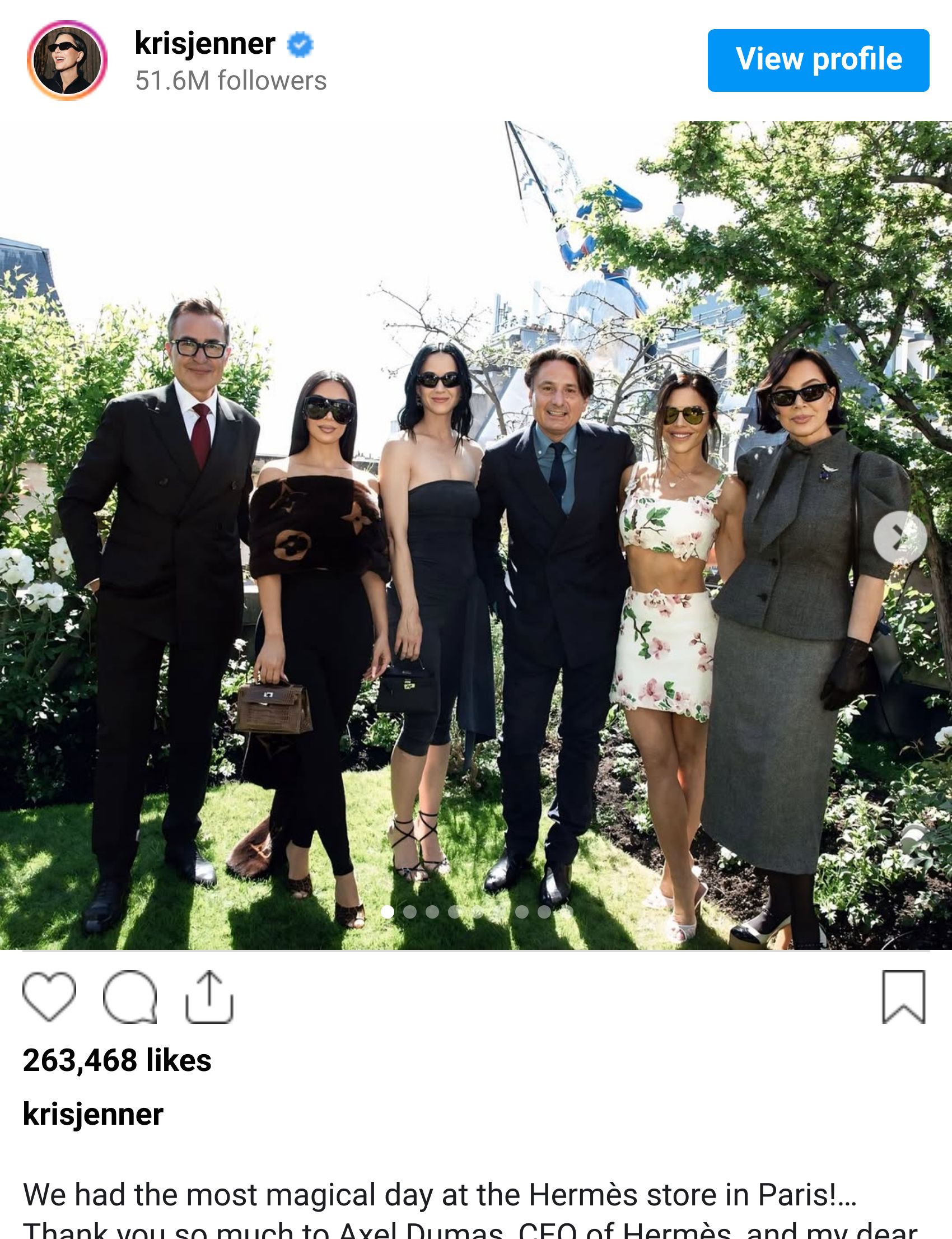
So many of the clients are tacky. Is that not what they're screening for? Like Lauren Sánchez or Kris Jenner.
I think they want to avoid Lauren Sánchez and people like that.
But at her bachelorette party, [Hermès executive Michael Coste] was posing with her.
Lauren Sánchez is very, very rich. So maybe it's different for her. If someone looked like her and walked into Hermès, [who’s] not Lauren Sànchez — I'm not sure they are the kind of customers they want to sell their bags to.
What kind of customer do they want to sell their bags to? All the Real Housewives seem to have them, too.
I feel like nowadays it's a bit difficult to know who has an original, who has a fake. I've been told by internal Hermès sources and by experts in authentication that in Paris, like 80 percent of the Birkins on the street are fakes. Even in the very prestigious arrondissement, most of the Hermés you can catch on the streets are fakes.
Does the Hermès game exist to avoid selling to resellers who will just go off and flip the bags?
Hermès doesn't answer to journalists. I tried to reach out for all my articles and they wouldn't answer.
They never reply at all? They never even just say “no comment”?
No.
In Paris actually, I never heard of a journalist who is not working for a publication of which Hermès is an advertiser [getting answers].
They don't want to be part of journalism, though.
For Glitz they wouldn't answer. They never comment, especially on the resale [market].
What Hermès does is like what Anna Wintour does with the Met Gala — either you're in and they approve you and sell you bag, or you're out and they don't. And people just have this insatiable desire for that approval, right? They do it better than any brand.
People now want to spend their money on things that matter and to have an experience. Being able to play the Hermès game could be an experience for some people.
But I think that being spied on and having to prove your worth to be able to spend 800,000 euros isn't cool anymore. I think Hermès doesn't have to change anything because even if they lose customers, they won't have any difficulties selling their bags. And by the way, bags are not what they make money with.
Talk about those economics. I have heard repeatedly from people who've worked at Hermès that if they didn't sell the furniture, the ready-to-wear, the scarves, the shoes, the horse saddles, the home accessories, whatever it may be along with the bags, they wouldn’t have a business.
I think that the [biggest] category in which they make money is furniture, actually, and less expensive stuff like ties or silk scarves. But having to get to a certain amount of pre-spend to be able to buy a bag helps them to sell the other stuff. People wouldn't be very into it if they didn't have to buy it, maybe.
When you turn on The Real Housewives, everybody has these bags. They just don't always seem special and they don't always look expensive.
I think that’s the flip side of Hermès’s strategy, because the more difficult it is to get a bag, the more fakes you will get on the market. That's totally what happened with Birkins and Kellys.

Subscribe to Back Row to read the rest.
Become a paying subscriber of Back Row to get access to this post and other subscriber-only content.
Upgrade