
💌 Forwarded this email? Sign up here and if you have tips or story requests, submit them here.
Please take a few minutes to fill out Back Row’s fall boot survey! I’ll share the community’s recommendations in an upcoming issue.
Loose Threads
News you can use: Candice Swanepoel is dating Tom Brady, according to TMZ. But don’t worry, despite both working as Victoria’s Secret Angels, Gisele Bündchen doesn’t feel “betrayed” because they “were never really close friends in the first place.”
Amy Griffin was overheard threatening New York Times reporter Katie Rosman’s son when she was at Ari Emanuel’s “annual Aspen retreat,” reports Semafor. (Griffin’s rep denied this.) This was shortly after the Times published a story Rosman co-authored looking into Griffin’s memoir The Tell. Ben Smith writes that Griffin “was livid, consumed by” the bad press and couldn’t follow friends’ suggestion to shrug it off.
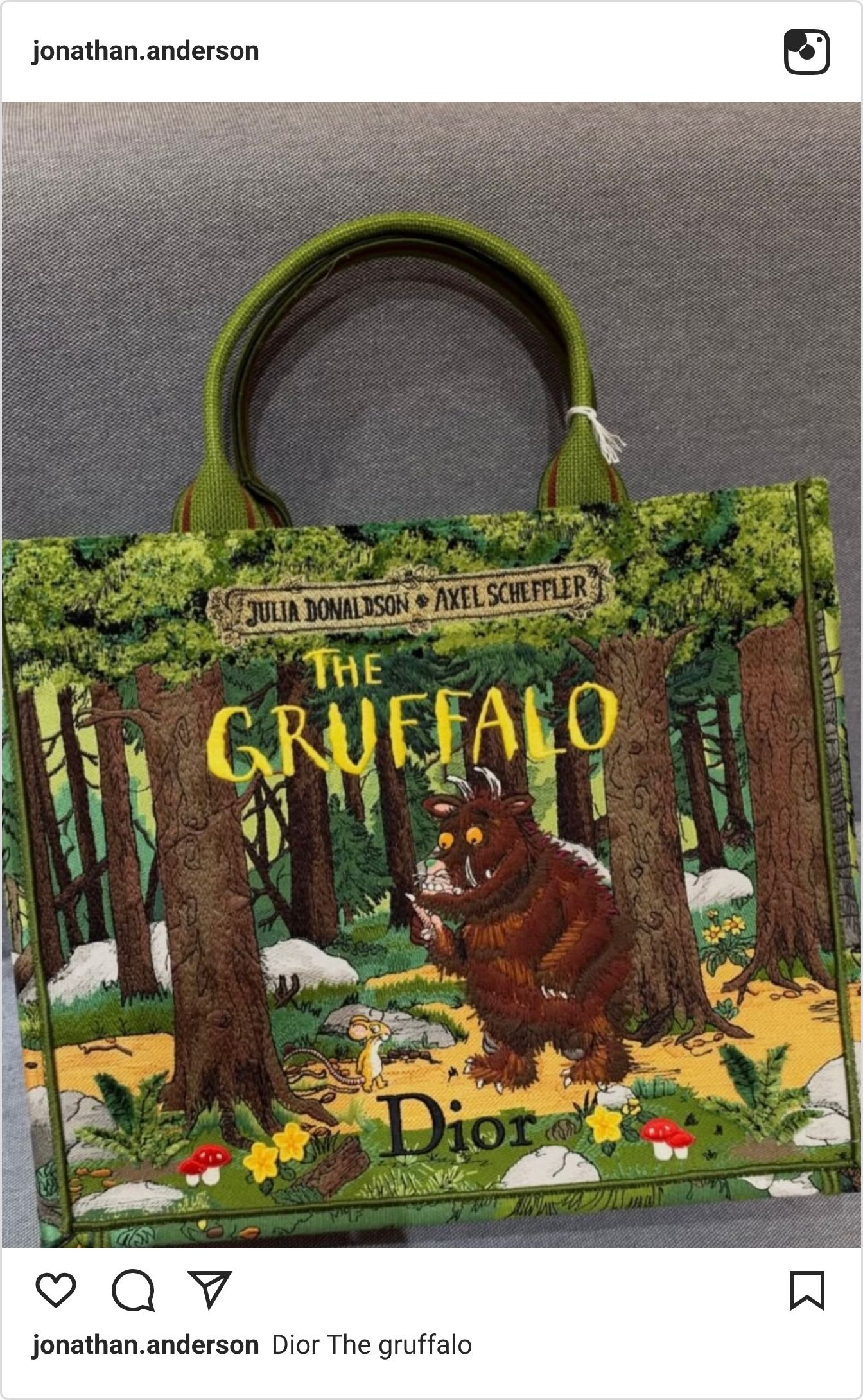
Oh look, oh no, it’s a Dior The Gruffalo book tote:
Beyoncé did an i-D cover to promote her Cécred hair products launching in the U.K. We’re discussing this type of thing more up ahead, but she even got them to put the name of her brand on the cover.

Heidi Klum teased her Halloween costume.

Ahead, today’s big story…
The Szilveszter Makó Pile-Up
We are witnessing the collapse of the fashion magazine ecosystem in real time. For evidence, look no further than the rapid rise of 35-year-old Hungarian photographer Szilveszter Makó.
Makó has had so many cover editorials drop online recently that a divide has emerged between people rooting for his success and those bemoaning his overexposure.


Makó’s newsstand pileup is like nothing I can remember in my nearly 20 years on the fashion beat. This month alone, he’s had five November cover shoots drop: Emma Corrin for British Harper’s Bazaar, Gigi Hadid for WSJ., Hunter Schafer for Elle, Jenna Ortega for Vogue, and Alicia Keys for Italian Vogue. His September covers included Sandra Bullock for Interview, Olivia Rodrigo for Vogue Philippines, and Cardi B for Vogue Arabia. Before the late summer/fall crush, in the first half of 2026, he shot Elle Fanning for Who What Wear, New York City first lady Rama Duwaji for The Cut, Rihanna for Edward Enninful’s 72, Anya Taylor-Joy for L'Officiel, and Daisy Edgar-Jones for British Vogue. He just told the Financial Times he has five more covers coming. A slew of advertising work, like his recent Adidas campaign, can’t be far behind.

Makó has been working steadily since around 2018. He photographed Bad Bunny for Vanity Fair's cover in 2023, and the Cyrus women for The Cut last year, but his Duwaji shoot seems to have kicked off the current craze for his work.
Honestly? Good for him. His images are arresting and identifiable, thanks to his oft-utilized box motif and a painterly effect, rendering his subjects like paper dolls. Makó is a generational talent. It’s not often a photographer comes along who completely changes the look of fashion and does it so quickly.
That said, how could magazines let themselves all look… the same? If you removed the titles from the individual shoots, there would be no way to tell which of Makó’s portraits belonged to which brand. It points to a failure of the editorial process that used to allow magazines to differentiate from one another.
Support Independent Fashion Journalism
Back Row is able to operate thanks to paying members. Join the community to support the independent journalism you find here, and unlock these stories:
“Honestly, 80% of what people think they know is a lie,” said a recent Hermès Paris employee about how people manage to buy Birkin bags.
Sources say the Met’s director was too intimidated by Anna Wintour to say no to the Galliano show.
“I screamed in pain. The person I was reporting to said, ‘OK, but can you count the shoes?’” Four fashion assistants share their Devil Wears Prada stories.
Annie Leibovitz still has an exclusive contract with Condé Nast, and she too is synonymous with a certain style, but that kind of arrangement is unusual today. An in-demand photographer is less likely to be signed by Vogue and therefore unable to work for competitors. In the ’90s and aughts, these contracts explained how photographers like Leibovitz, Mario Testino, and Steven Meisel became synonymous with Vogue.
Jill Demling, who booked covers for American Vogue for nearly 20 years and now hosts the Going Rogue podcast featuring interviews with people like Edward Enninful, said publishers don't have the budgets for exclusive contracts like they once did. She added, “Celebrities have a lot more say now.” Stars almost certainly requested Makó and his signature style versus doing something, well, outside his usual box. Stars can pretty much dictate who they work with on shoots, from stylists to hair and makeup people, and publications routinely send creative decks to their teams for approval. If you look at the full breadth of his work, you’ll find more range than you do on the magazine covers. For instance, his spring 2022 Maison Margiela Co-Ed shoot and this series for the Bauhaus Ballet, funded by Capital One.
“Let’s be real, no one had such an original take that we’ve never ever seen before,” said Demling of Makó. The problem is that it starts to look less original when magazines can’t own it as part of their distinct aesthetic. The recent WSJ. and Vogue shoots, Demling noted, even featured the same Balenciaga couture dress. “I don’t know how that happened because Vogue usually had some sort of exclusive,” she said. Maybe exclusives are harder to come by — or reserved strictly for covers. Brands hold more power than ever now. Why should they agree to an exclusive with one magazine when they can spread their seed across them all?
Another problem, I suspect, is that magazines are edited out of fear trickling down from shit-scared business people. The curious thing about the abundance of Makó shoots is not that magazine editors are drawn to his work, which was a total scroll-stopper before we started seeing so much of it. It’s that magazines aren't taking advantage of the newsstand collapse to exercise more creative freedom generally. Theoretically, these titles have an opportunity to do something original and weird that strains the imagination of what photography, a cover, or a cover star can even be, because there are no “newsstand sales” anymore. Magazines are printed as a vanity exercise for the benefit of certain advertisers rather than a mass audience of readers. Brands’ demands surely prevent editors from doing something weird and unique that was never seen as "selling" 20 years ago.
Vogue once succeeded by taking a more expansive view of what a fashion magazine could be, because Anna Wintour took a number of swings over her career as editor-in-chief. When she got her job in the summer of 1988, one of her first orders of business was ripping up Richard Avedon’s contract. He had been photographing every single Vogue cover under her predecessor Grace Mirabella, and she needed to modernize and make a clean break. More than a decade after that, she oversaw another sea change from models on covers to celebrities.
This is one mark of a great editor. She architected a winning formula by looking over her shoulder at her own work, so it didn’t seem too similar, and keeping tabs on the competition (when Liz Tilberis released her first Harper's Bazaar cover, with Linda Evangelista, Anna knew it was good). Demling recalled, “To avoid consecutive covers looking too similar, Anna would switch photographers, cover brand credits, even studio versus a location, so each issue had a fresh take. She pushed us to think out of the box and not just fall back on what worked before.”
In an ideal world, editors in 2026 would operate with permission to live out their creative fantasies. But unfortunately, they’re more (and quite literally) boxed in than ever before.
The Kim Kardashian Biography Is Out Today
I interviewed author Jonathan Van Meter for the Back Row podcast about his authorized biography of Kim Kardashian, Citizen Kim: The Woman Who Created the Future.
I would not call myself a “fan” of Kardashian, but I found this book — and talking to Jonathan about writing it — totally engrossing. Grab a copy from your local indie bookstore this week if you can.
You can also find our conversation in full on Spotify and Apple Podcasts.
Jennifer Lawrence Hard-Launches Hair Products for ‘NICE PEOPLE WHO DON’T LEAVE MEAN COMMENTS’
Jennifer Lawrence fans continue to feel betrayed by her joining Instagram apparently for the purpose of selling us hair products, as though stars are on these platforms for reasons other than self-promotion with the aim of making more money.
She hard-launched the line, “Mes,” with a cover story in The Cut and a horizontal video on Instagram with the following caption:

So clearly she’s aware of the acute feelings of betrayal from fans who thought she was too cool to shill hair serum.
The Cut story was pretty convincing. She talked about how she’s been working on this for three years, how she was involved in every detail from formulation to packaging, and how she’s now asking herself, “What if everybody hates it?”
A celebrity of her age and stature doing a beauty line is understandable. Hollywood is the “new Detroit,” many of her peers shill us serum already, and it costs a lot to be a star. However, she totally lost me here:
“The moment something was fussy, it was like ‘no,’” she says. “Avoiding pretentious words and pretentious font is big. Our girl is not that. But she appreciates beauty.”
The line is technically called “mes” with a lowercase “m” and a little degree sign at the end. If you ever find coverage of this brand in Back Row again, I’m going with The Cut’s grammatical styling of “Mes.” I’ll happily go out of my way for J Law but learning the keyboard shortcut for a degree sign is where I draw the line.
Here’s Dior’s $8,200 Advent Calendar
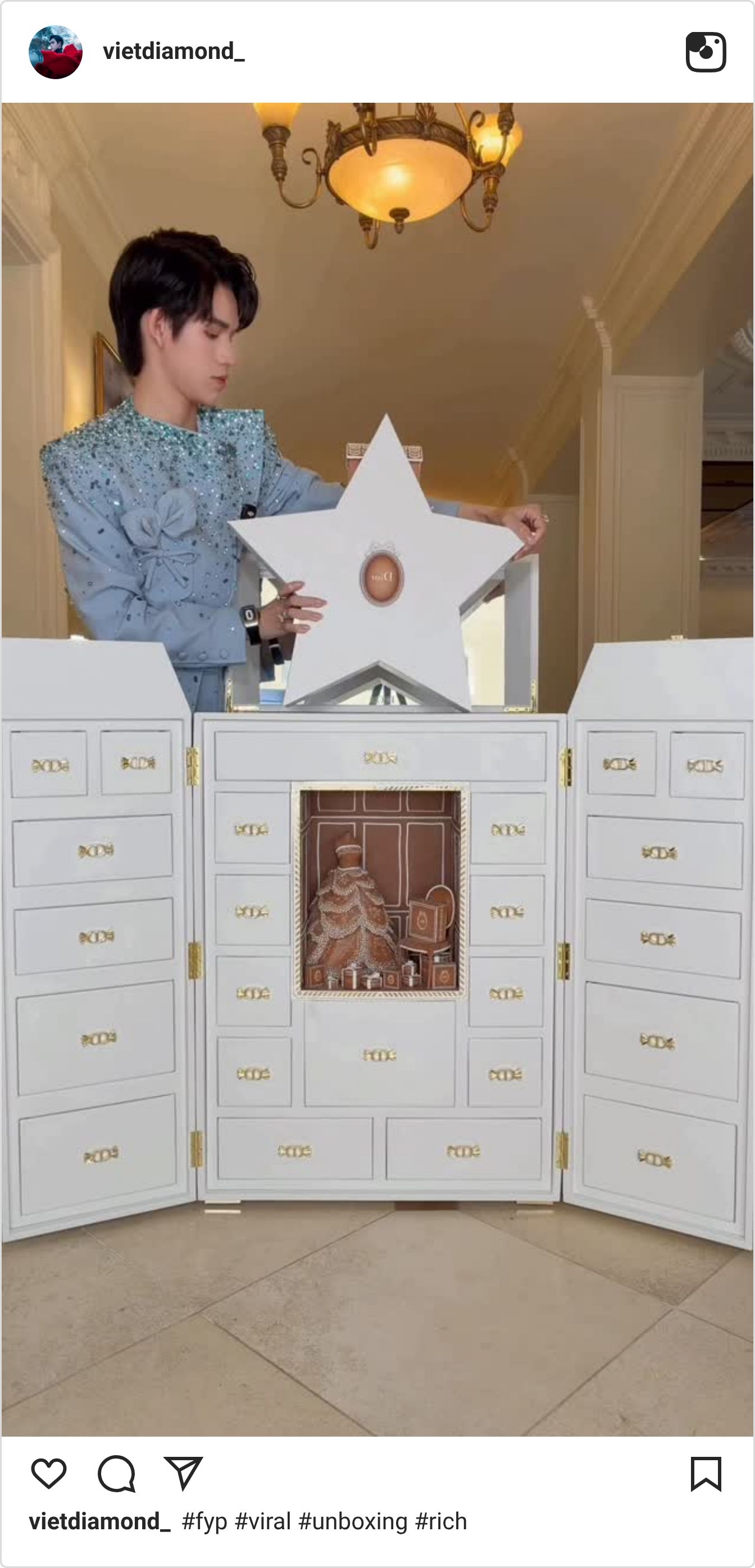
This guy says it’s $10,000 but it’s listed online at $8,200. With tax it would come to about $9,000 in New York. It features perfumes and branded ornaments, in case you’ve ever looked at your Christmas tree and thought, If only this looked more like it belongs in the middle of a Dior store instead of my house.


Amy Odell is the New York Times bestselling author of Gwyneth: The Biography; Anna: The Biography; and the essay collection Tales from the Back Row: An Outsider’s View from Inside the Fashion Industry. Write her at amy (at) amyodell (dot) com. Submit a tip or story request anonymously here.
Partnership inquiries: [email protected]
Back Row may earn commission if you purchase through affiliate links in this newsletter, which helps support the operations of this publication.
